
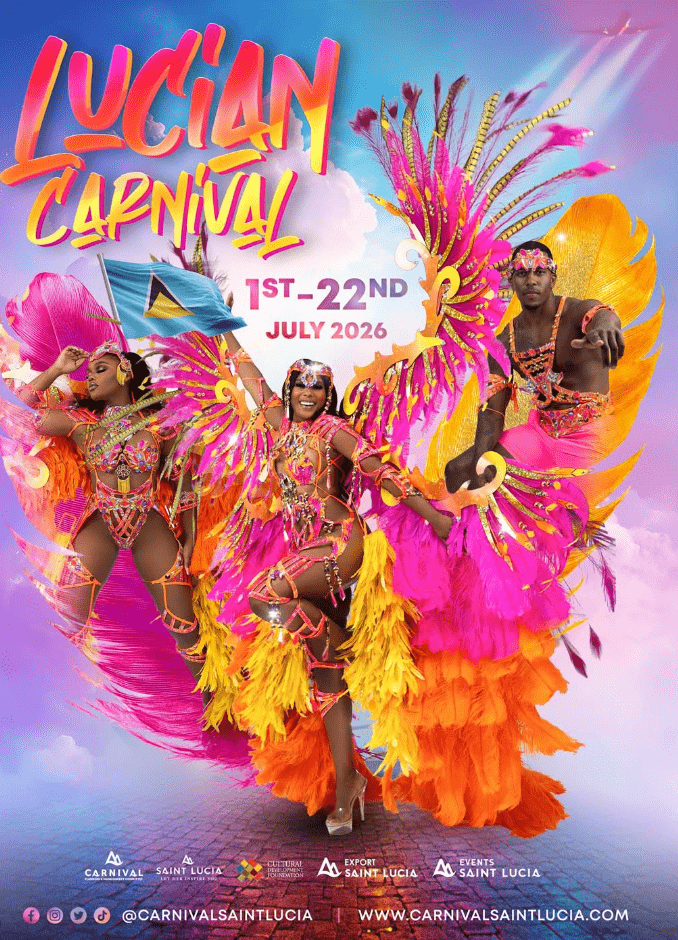
Last night’s official media launch for Saint Lucia Carnival marked the start of another season. The calendar was unveiled, the music and cultural elements were highlighted, and the familiar energy that surrounds Carnival began to take shape again. Each year, moments like this remind us that Carnival is not simply an event. It reflects who we are.
Carnival is often described as a celebration. And it is. It is color, music, movement, and release. It is the sound of soca vibrating through speakers and the sight of costumes moving through the streets. But beneath the spectacle, Carnival also reveals something deeper about us as a people.
Culture has a way of reflecting society back to itself.
As someone who has experienced Carnival both as a participant and an observer, I’ve come to see it as more than a season of events. It is a space where identity becomes visible. The music we celebrate, the bands we support, the way we move through the streets, all of it reflects something about how we see ourselves and how we want to be seen.
Carnival reflects our creativity. The music, costumes, choreography, and energy of the festival all demonstrate the imagination that lives within our communities. Entire bands, songs, and performances are built from ideas that begin long before the season officially starts. Carnival reminds us that creativity is one of the Caribbean’s most powerful forms of expression.
But Carnival also reflects our tensions.
It shows the balance we constantly navigate between tradition and evolution. Between cultural pride and commercialization. Between freedom and responsibility. Lucian carnival grows every year, attracting visitors, sponsors, and international attention, and with that growth comes the challenge of preserving the spirit that made it meaningful in the first place.
Carnival does not hide these contradictions. It reveals them.
The same streets that hold celebration also hold debate. People argue about what Carnival should be, what it has become, and what it should represent. Those conversations are not signs of failure. They are signs that the culture matters enough to protect.
That is why Lucian Carnival is more than a festival.
It is a mirror.
It reflects our joy, creativity, contradictions, and ambitions as a society. When we look closely at Carnival, we are really looking at ourselves, our values, our priorities, and the way we choose to express who we are.
And perhaps that is why Lucian Carnival continues to endure. Not just because of the music or the costumes, but because it remains one of the clearest reflections of Caribbean life and identity.
xoxoxo
Meli Mel